
At the First Conference on Transitioning Away from Fossil Fuels in Santa Marta, Colombia, a panel convened by the Exponential Roadmap Initiative brought together leaders from food, finance, and government to address one of the most consequential questions of our time: how do we move regenerative agriculture from promising pilots to exponential scale?
The session, moderated by Catarina Rolfsdotter-Jansson of We Don’t Have Time, opened with a stark framing from Johan Falk, CEO and Co-founder of the Exponential Roadmap Initiative. The agrifood system is responsible for approximately 30% of global emissions, accounts for around 70% of freshwater withdrawals, and drives nearly 90% of deforestation. Yet despite growing momentum, regenerative agriculture has not yet reached its exponential inflection point.
Johan Falk explained:
“The tipping point will come when regenerative agriculture becomes the most rational economic choice for farmers, food companies, banks, insurers, and governments […] A key bottleneck is the farmer business case, because the farmers can’t be expected to carry the risk while others capture the value.”
From Supply Chain to Landscape: Oatly’s Six-Year Journey
Stacy Cushenbery, Senior Manager for Global Regenerative Agriculture at Oatly, shared the company’s experience navigating this challenge in practice. After six years of building regenerative programmes in Canada and Sweden, currently accounting for 30% and 15% of equivalent supply respectively, Oatly has set targets to reach 30% of global equivalent supply by 2030, 90% by 2040, and 100% by 2050.
Cushenbery was candid about what it takes to get there, and said:
“I firmly believe that regenerative agriculture has to happen in two different ways. It has to happen both within a company’s supply shed, within their direct supply chain… and then also at the landscape level.”
She called for greater corporate transparency on what works and what does not, and made a pointed structural recommendation: farmers must have seats at corporate decision-making tables. She said:
“We need farmers to be in all these decision-making parts of especially CPG [consumer packaged goods] companies, so that they really can talk about some of the struggles that they’re having.”
Rewiring Financial Economics at Scale
Sanmit Ahuja, Managing Director and CEO of Bharatia, brought the perspective of the Global South, where 6 of the world’s 8 billion people live. His diagnosis was precise: the $150 trillion managed by pension and insurance funds cannot reach fragmented smallholder agriculture because the minimum check size for institutional investors is $200 million — which, at 10% of a project’s total funding, means projects must reach $2 billion to qualify. Agriculture, as currently structured, cannot absorb that.
“Farmers don’t like to be preached practices; they like to be preached economics. So if you don’t get the farmer economics right… where is the business case?” said Ahuja.
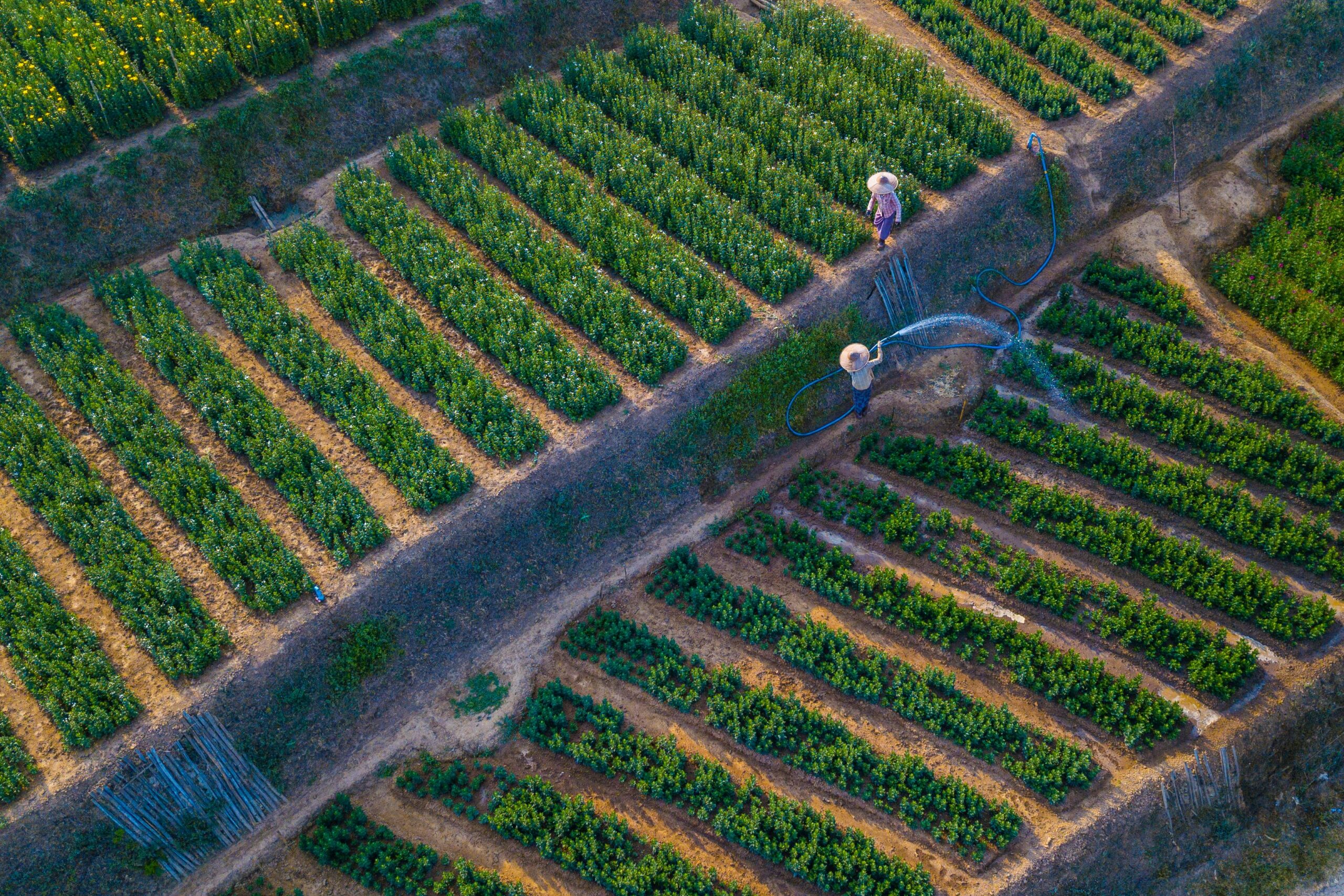
Bharatia’s response is to rewire the financial architecture through three models: redirecting urban nutrient waste back to farms to break dependence on chemical fertilisers; deploying climate-controlled greenhouse “shared farms” funded by green bonds, which can increase farmer income from $200 to $2,000 per month; and creating markets for agricultural biomass waste so farmers are paid to stop burning their fields.
Justice, Sovereignty, and the Great Green Wall
Serigne Momar Sarr, Technical Advisor to Senegal’s Ministry of the Environment, grounded the conversation in history. The transition in Africa does not begin from a neutral starting point. Colonial land dispossession and extractive agricultural models have left a legacy that any credible transition must address. Senegal’s approach prioritises agroecology, soil restoration, and community land sovereignty, exemplified by its leadership in the restoration initiative, the Great Green Wall.
Sarr was direct in his demands of the private sector and called for co-creating solutions rooted in local communities, fair value chains, appropriate technology transfer, and financing that reflects African realities.
The Exponential Race to the Top
The panel’s collective message was clear: the race to regenerate land and food systems is already under way, and the organisations that move first — fixing the farmer business case, unlocking institutional capital, and building genuinely just supply chains — will define the competitive landscape of the food economy for decades to come.
The Exponential Roadmap Initiative convened this session as part of its ongoing work to identify the tipping points that turn climate solutions from niche to norm. The Santa Marta conference marks a pivotal moment: the conversation is no longer about whether regenerative agriculture can scale, but about who will lead the race.
