
About the guide
This guide is for managers and employees in e.g. business development, product design and management, procurement, and sustainability roles. It offers practical steps for companies to analyse their value chain, product portfolio and business model in order to scale circular climate solutions and fully integrate circularity into their strategic business functions.

Actioning the Exponential Business Playbook
The Exponential Business Playbook sets out a five-pillar climate strategy focusing on four pillars that need to be addressed in a company’s climate strategy to align with the 1.5 °C ambition.
The Circular Action Guide cuts across both pillars 2 and 3 to scale circular climate solutions. Pillar 2 focuses on actions a company should take to reduce its value chain emissions, including through “integrating circularity at the heart of all innovation and development processes.” But this guide also develops further an action to be taken under pillar 3, to “determine the business models, products and services for your sector that will be compatible with a net zero world.“
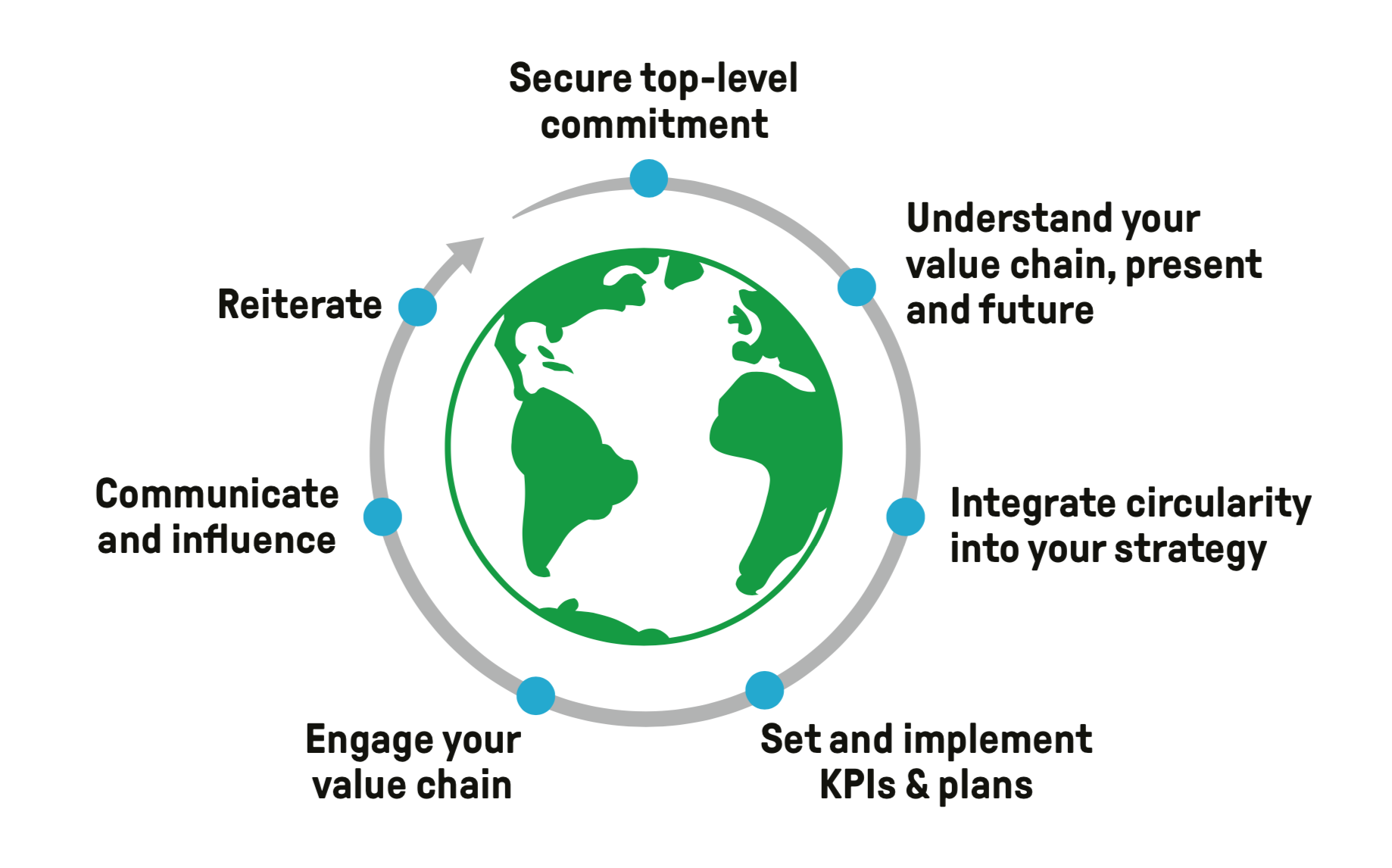
It provides a step-by-step guide for shifting from a linear to a circular value chain. Such a shift will involve the entire organisation, and companies will have to work in close collaboration with existing and new suppliers and customers to achieve this.
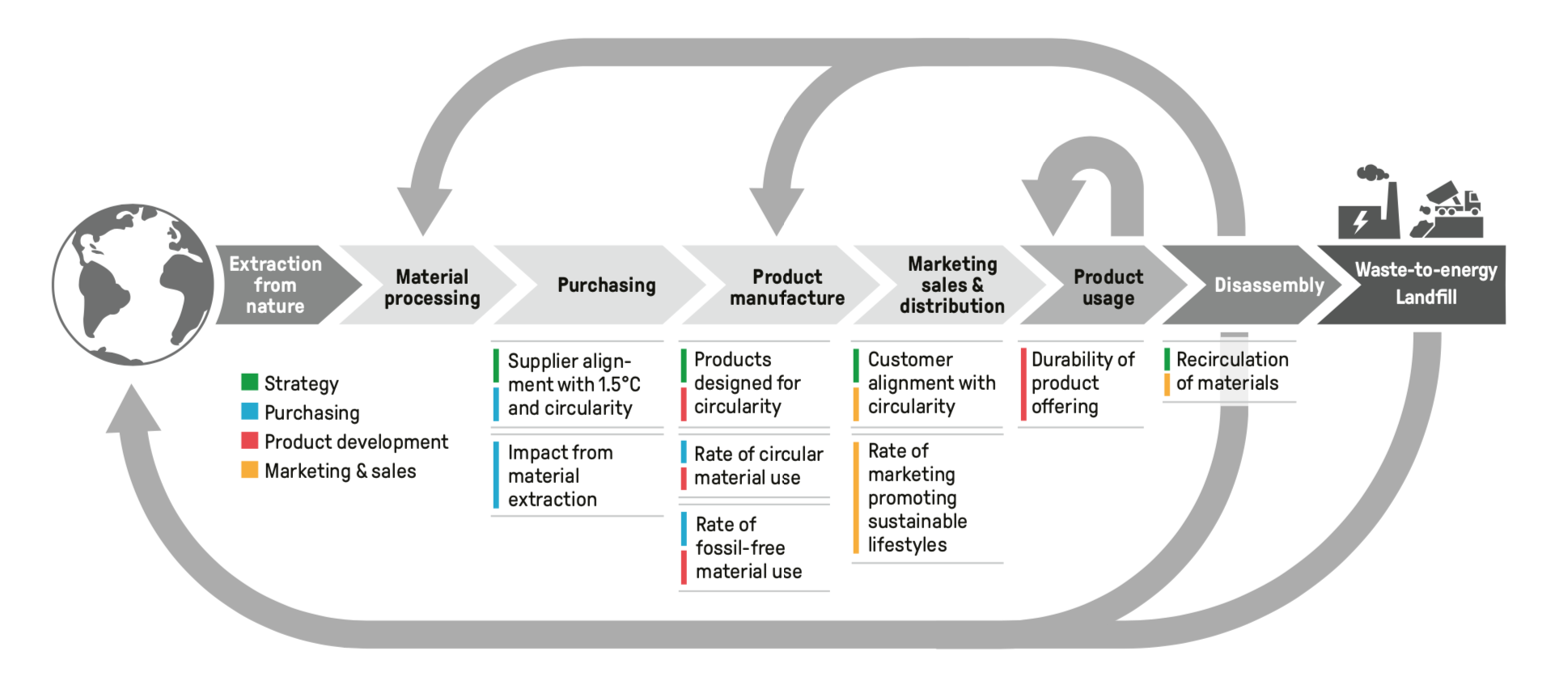
Key performance indicators (KPIs) should be integrated in your business and transition plans in order to drive the business to transform towards a net zero and circular value chain.
More resources
Climate solutions
Find out more about our work on climate solutions, and the criteria we propose for qualifying what product or service is a climate solution.
Other guides under the 1.5°C Business Playbook
Under Pillar 2, reducing value chain emissions, the Supplier Action Guide takes a broader look at supply chain action. The Transportation Action Guide lays out how to reduce emissions from the transport of goods throughout the value chain. The Greening Cash Action Guide lays out actions for companies to reduce the indirect emissions from their financial supply chain.
Latest news

Solutions Exist. Now Markets Need to Catch Up.
At Climate Week NYC 2026, ERI, Oatly and Beyond Meat explored how stronger market signals can help climate solutions compete, scale and become the default choice.
Commodity Certificates as a Necessary Mechanism to Scale Solutions and Decarbonise Hard-to-Abate Sectors
Commodity certificates can help unlock the investment needed to scale low-carbon solutions in hard-to-abate sectors such as steel, cement and chemicals. This article explores how they can bridge the gap between emerging supply and global demand, while outlining the infrastructure needed to build a credible, trusted market.

Beyond Consensus: The Business Imperative for a Post-Fossil Fuel Future
The climate conversation is shifting from whether we must phase out fossil fuels to how quickly we can deliver a fair transition. At London Climate Action Week, ERI and FFTI brought business, investors and civil society together to focus on implementation, with a clear call for policy certainty, market reform and coordinated corporate action to scale fossil-free solutions.


