
At the First Conference on Transitioning Away from Fossil Fuels in Santa Marta, Colombia, the Exponential Roadmap Initiative and We Don’t Have Time convened a panel of energy leaders from Sweden, Uruguay, and Latin America to examine one of the defining questions of the decade: how fast can the world’s energy system decarbonise, and what will it take to get there?
The answer, according to the panel, is that the race is already exponential. However, it’s yet too slow.
Johan Falk, CEO and co-founder of the Exponential Roadmap Initiative, opened with the trajectory that underpins ERI’s work: the Carbon Law, which requires global emissions to halve every decade from 2020. Humanity is currently five years behind schedule. But Falk’s message was one of grounded optimism:
“We are close to bending the curve. And the reason for that is the exponential evolution of clean electricity and energy efficiency, so that is so incredibly important.”
Solar is doubling every three years, wind every six, battery storage every year.
“We believe there is an opportunity to reach what we call the cross point, which is 50% by around 2030. And we should aim for 75% of clean electricity before 2040; we think that is absolutely achievable.”
Uruguay’s blueprint: Political will as the missing ingredient
María Fernanda Souza Rodríguez, National Director of Climate Change at Uruguay’s Ministry of Environment, offered the panel’s most compelling proof of concept. Uruguay now generates 98% of its electricity from different renewables (hydro, wind, solar, and biomass). This is a transformation achieved not through technological luck but through deliberate political architecture.
Souza Rodríguez said:
“It was the result of a stable political decision which came after a social dialogue and an agreement that was reached between all the political parties that we needed to have an energy strategy that would put us out of the security issues that, for instance, many countries are facing now. When the political will is there and when you give the right signals to the market, then the investors respond. But there was also a strategy of de-risking.”
Power Purchase Agreements and state-backed auctions provided the predictability that private investors required. Grid coverage now reaches nearly 100% of homes with energy access framed as a human right. The work continues as Uruguay navigates the fiscal reality that the state currently depends heavily on fossil fuel tax revenues.
The untapped frontier: Energy efficiency
Anna Hall, Head of Public Affairs for the Energy Division at Alfa Laval, made the case that the most cost-effective lever available is one that is consistently underused: energy efficiency. She said:
“I think energy efficiency is the most cost-efficient way to really get going on both climate decarbonization, of course, and move away from fossil fuels, but absolutely towards our energy security, energy affordability, and also our competitiveness.”
Without the efficiency gains of the past two decades, the EU would be consuming 27% more energy today. Continued investment could reduce the bloc’s fossil fuel imports by €33 billion by 2030.
Alfa Laval is leading by example: Net Zero in Scope 1 and 2 by 2027, a 4% annual efficiency improvement target, and a 90% reduction in heating costs at its Lund headquarters by capturing waste heat from factory processes. Hall explained the strategy:
“Long-term policies, as Uruguay was lifting here, that is really essential. So we by that can mitigate risk and have a very long-term plan and make it attractive to invest.”
Latin America: A region ahead of the curve but with its own contradictions
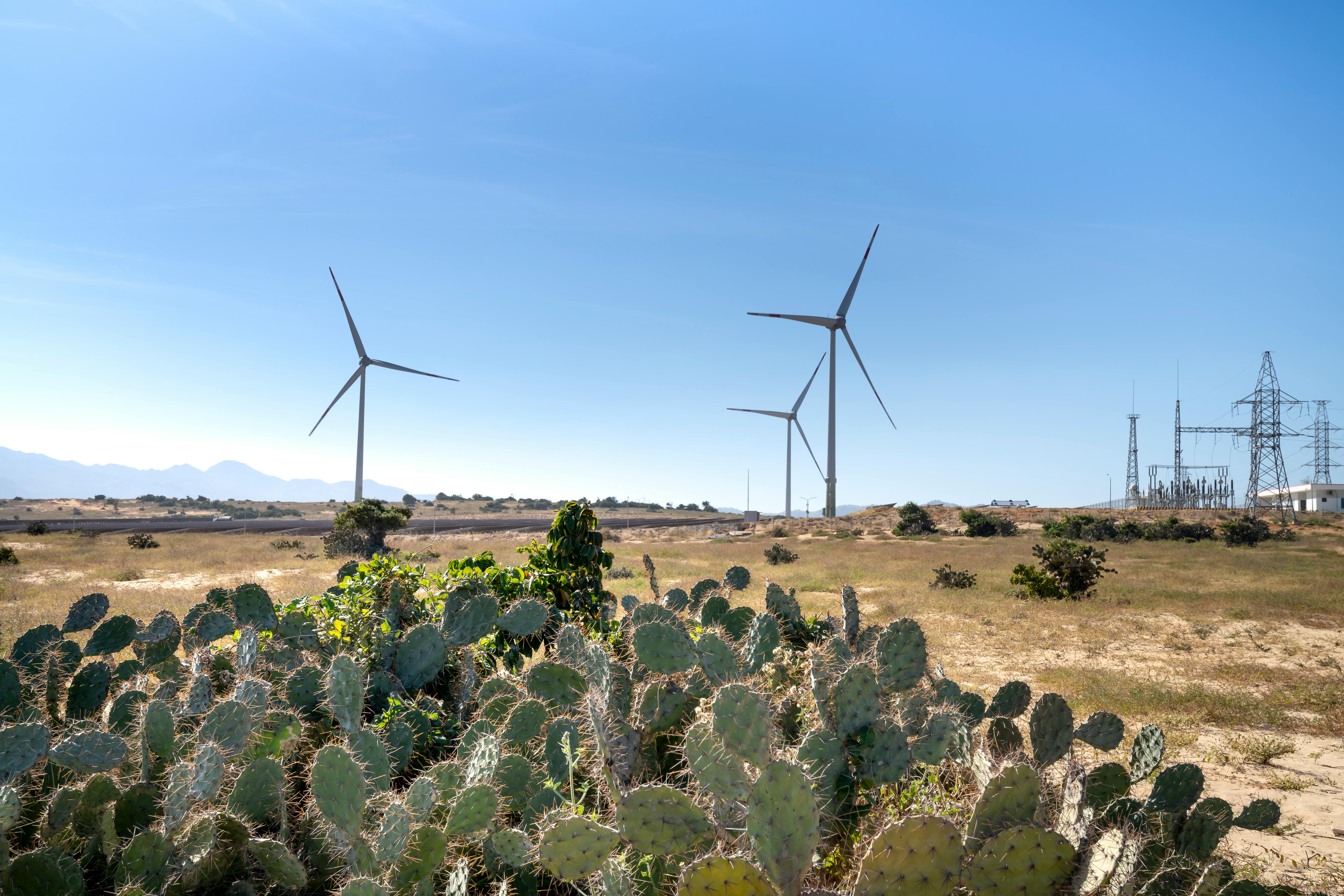
Wilmar Suárez, Latin America Energy Analyst at Ember, provided the regional picture. Latin America and the Caribbean already generates 63% of its electricity from renewables, which is nearly double the global average, and peaked fossil power generation in 2015, reducing it by 16% since. Paraguay and Costa Rica operate on 100% renewable electricity. Chile has cut fossil generation by 33% since its 2013 peak.
But the region also contains its own contradictions. Cuba and the Bahamas still generate over 90% of electricity from fossil fuels. Mexico, one of the region’s largest economies, generates over 70% from fossils, with 55% coming from imported gas. Suárez said:
“Something we need in Latin America at this moment is having a regional interconnection. We don’t have it; we have one interconnection in Central America, but in order to combine hydro, wind, solar, and storage, it would be key to have a regional interconnection.”
A race to the top
The panel’s collective message was clear: the exponential race to a clean, secure, and resilient energy system is not a future scenario but already under way. The organisations and governments that lock in long-term policy frameworks, invest in energy efficiency alongside generation, and build the grid infrastructure to carry renewable power across borders will be the ones that define the energy economy of the 2030s.
The Exponential Roadmap Initiative continues to work with leading companies and governments to identify and accelerate the tipping points that move clean energy from promising to dominant.
