
The global energy transition is already underway. Solar, wind, and electric vehicles are scaling exponentially and the tipping points have been passed. But according to Johan Falk, CEO and Co-founder of the Exponential Roadmap Initiative, that progress alone is not enough. At the First Conference on Transitioning Away from Fossil Fuels in Santa Marta, Colombia, Falk opened the green cement panel by drawing a line between two distinct phases of the climate challenge.
Falk said:
“The energy transformation is already on its way. Renewable energy, solar, wind, electrical vehicles are scaling exponentially and we passed the tipping points. And that can take us to almost the first halving of global emissions. But that’s not sufficient. We also need to accelerate the material transformation, and we have to do that in parallel in order to address the second halving.”
Cement sits at the centre of that material transformation. It accounts for 7 to 8 percent of global emissions, making it one of the largest single sources of CO₂ in the global economy. Yet the sector also holds significant potential to move beyond emissions reduction towards carbon capture and even carbon-negative pathways.
The panel at Santa Marta brought together the CEO of the Exponential Roadmap Initiative, the Carbon Removal Lead at the Climate High-Level Champions, and the head of public affairs at the world’s second largest cement manufacturer outside China to examine what it would take to move the industry at the speed the climate requires.
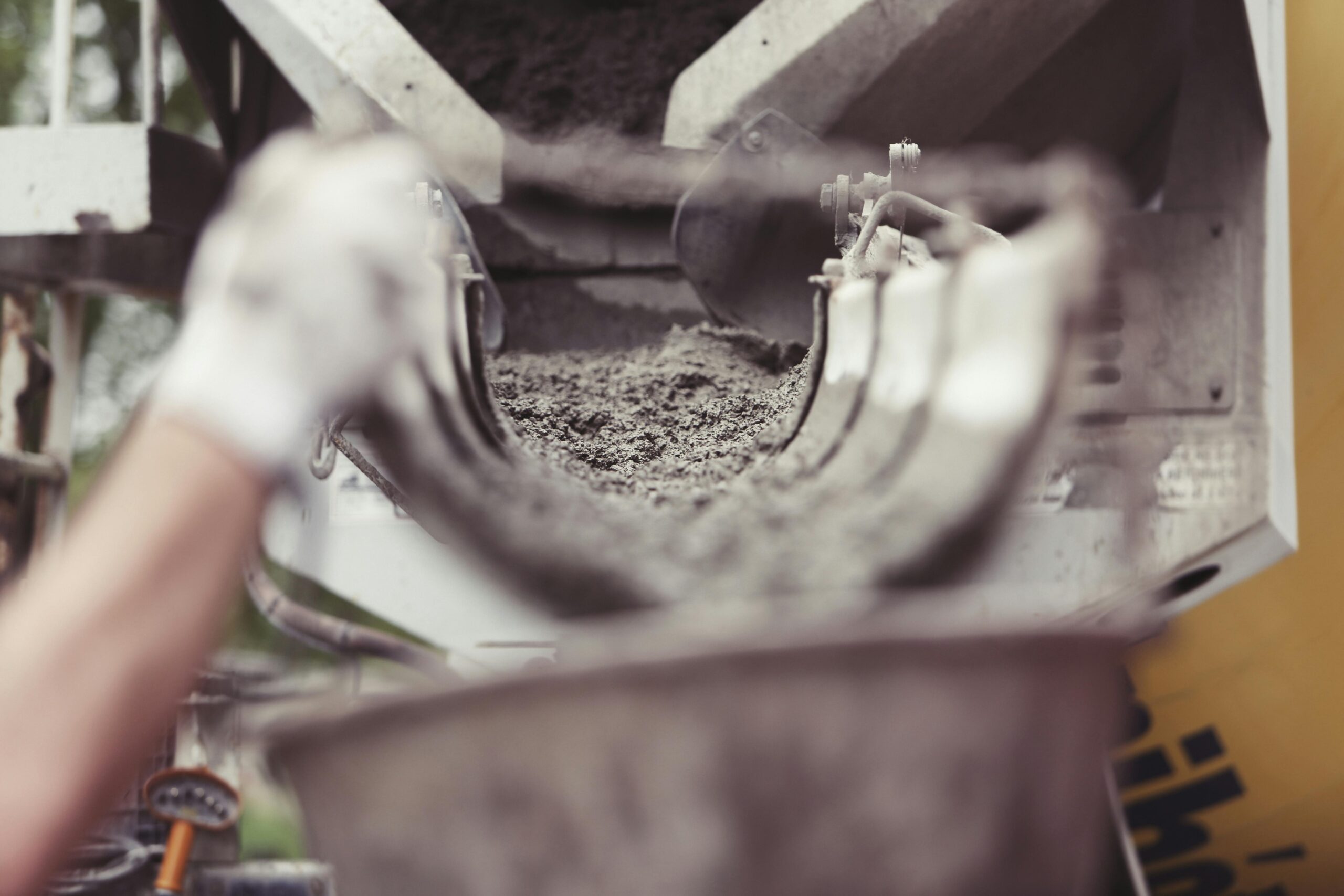
The technology already exists
Pia Prestmo, Manager of Public Affairs at Heidelberg Materials, opened with a concrete milestone. In June 2024, Heidelberg opened the world’s first full-scale carbon capture facility at its cement plant in Brevik, Norway. The plant is now selling the world’s first carbon capture cement on the market, and the technology reduces the emissions associated with concrete production by up to 90 percent. A second facility is under construction in Padeswood in the United Kingdom, which will capture 800,000 tonnes of CO₂ per year.
Prestmo said:
“The good news is that last June we opened the world’s first full-scale carbon capture facility at our cement plant in Brevik in Norway. We are currently selling the world’s first carbon capture cement on the market, making it possible to reduce the emissions that stem from concrete by up to 90%. Which is quite the paradigm change.”
The reason carbon capture is not optional for the cement industry, Prestmo explained, is structural. Two thirds of cement’s emissions come not from the energy used to heat the kilns but from the chemical process of converting limestone. That process cannot be electrified. For Europe, the EU Emissions Trading System cap will effectively reach zero by 2040, making it, as Prestmo put it, “for all practical circumstances, pretty much illegal to emit CO₂.” Carbon capture and storage is therefore not just a climate strategy for Heidelberg. It is a license to operate.
Concrete as a carbon sink
Christopher Neidl, Carbon Removal Lead at the Climate High-Level Champions, broadened the frame. Concrete is the most used material in the world after water, and global demand for it is not going down. That scale, Neidl argued, is precisely what makes it such a significant opportunity for carbon dioxide removal.
Neidl said:
“The key to scale for many of these pathways is through integration with existing high-volume, high-magnitude industries with big outputs. Concrete and cement are really, really significant. And a lot of it is for the reasons that were just stated, is that it’s the most used material after water in the world, and we’re not going to be using less of it, we’re going to be using more of it. And it’s foundational to our built environment.”
He outlined three pathways for running carbon removal through the material. The first is retrofitting or building new cement plants with bioenergy combustion and carbon capture, as Heidelberg has done in Brevik. The second is replacing conventional aggregate with biochar made from municipal or agricultural waste, which can substitute for some of the cement content and lock carbon into the structure of the building. The third is mineralising carbon directly into the concrete from flue stacks or the air. Each pathway is available today. The barrier, Neidl said, is not technical. It is economical.
The demand pull problem
Both Neidl and Prestmo converged on the same constraint: the industry will not move at the required speed without a reliable business case, and that business case depends on demand. Prestmo was direct about what Heidelberg needs to make the technology viable at scale.
Prestmo said:
“You need three things to make CCS work: you need a place to store it, you need public-private collaboration in order to have this risk sharing of building the carbon capture facility itself, but then the big, big lever is the pull from the demand side. You need to sell carbon capture products. You need to have a business case, or it’s not going to work.”
Neidl pointed to public procurement as the most immediate lever available. Governments purchase approximately 40 percent of all concrete globally. They already use green purchasing criteria in other areas. Applying those same tools to concrete, whether through green premiums, selection advantages, or advance market commitments, would create the demand signal the industry needs to invest at scale. Norway has already moved in this direction, recently mandating that public procurement must weight the environment and climate at 30 percent. Neidl said:
“Governments, the public sector globally, purchases about 40% of all concrete. They have levers in their own procurement decisions, which they already use for green purchasing, to give either premiums or selection advantages to concrete that comes in that actually has a certain global warming potential, whether it’s really low or negative, is one way to give a really material boost.”
The race to the top
Falk closed the panel by pointing to where the trajectory leads if the demand pull is created. A portfolio approach combining reduced material use, reuse, new binders, clean heating, and carbon capture does not just decarbonise cement. It opens the possibility of making cement carbon negative, turning the built environment from one of the largest sources of emissions into a carbon sink. He said:
“There is really a tremendous opportunity if we can combine these things, actually make cement carbon negative. Because that would make it possible to make buildings and infrastructure an opportunity rather than a problem.”
The Exponential Roadmap Initiative is working with companies, governments, and procurement bodies to create the lead demand that takes the industry to that tipping point.
