
During a hot morning at London Climate Action Week 2026, Exponential Roadmap Initiative (ERI) and Adapteo Group convened a roundtable around a deceptively simple question:
If many of the solutions needed for the transition are already commercially viable, technically credible and ready to scale, why are markets still moving too slowly to deliver 1.5°C-aligned transitions?
Under Chatham House rules, the narrative that emerged in the room was clear. This is not primarily a technology problem. Nor is it a shortage-of-capital problem. It is increasingly a market infrastructure problem: the signals, standards, procurement rules, accounting systems and investment frameworks that decide which solutions are recognised, trusted, bought and scaled.
From circular business models to low-carbon materials and sustainable fuels, participants described solutions that are not speculative. They have business logic, operational experience and clear relevance to decarbonisation. But their full potential is constrained when they compete in markets still designed around conventional, linear and fossil-based alternatives. The result is a system that too often gives the wrong conditions to the right solutions.
This article offers a first outline of practical measures for different stakeholder groups on how to help build the market infrastructure the transition requires. We invite producers, buyers, investors, policymakers, and civil society actors to engage further with us — to refine these measures into concrete recommendations and action, and to continue the conversation at New York Climate Week and beyond.
When the market misreads the solution
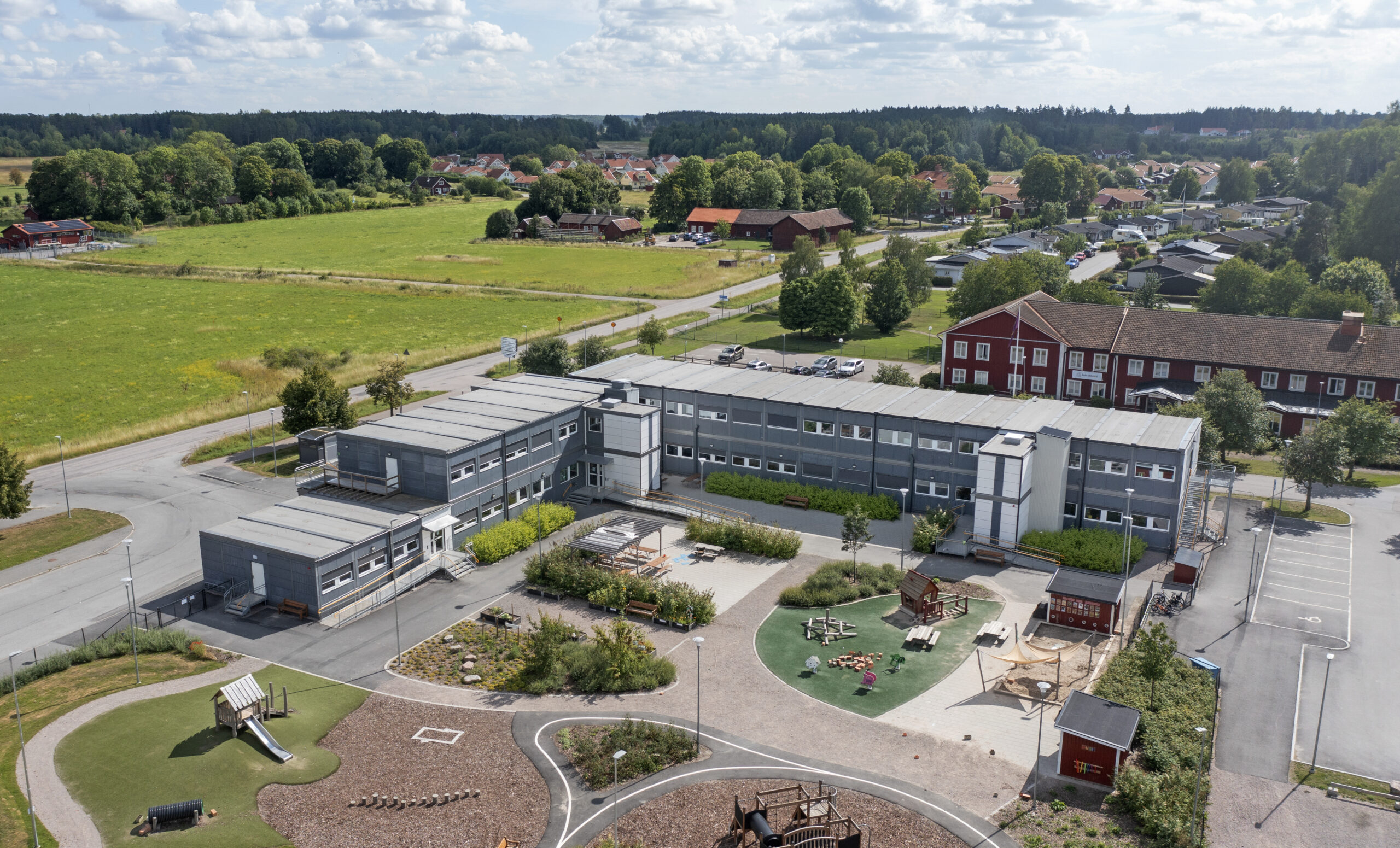
As a co-host of the session, Adapteo Group opened the discussion with an example from the built environment. A municipality may need new school or healthcare capacity quickly, while facing uncertain demographics, tight budgets and climate targets. A flexible, circular building solution should be attractive: It can be deployed faster than conventional construction, refurbished and reused, moved when needs change and help avoid overbuilding against forecasts that may not hold.
Yet the market does not always see that value and Adapteo shares the experience of being labelled as a temporary asset rather than treated as essential social infrastructure. That single label can determine which budget may be used, how long a contract can run and whether an option is taken seriously in procurement. A solution that reduces whole-life cost and risk can also be penalised because it shifts spending from capital expenditure to operating expenditure. One department protects one budget line, another protects another, and no one is rewarded for optimising the whole system.
This is a form of mis-coded reality. A better solution can be treated as riskier simply because it does not look conventional. Tenders can reward lowest upfront price while ignoring avoided demolition, reduced material demand, lower emissions and resilience to changing needs, indeed, total cost of ownership. It can ask for climate-aligned outcomes while still using categories, budgets and risk models built for a different economy.
The same pattern came through in other sectors. A waste-to-fuel solution can create value by treating waste and producing fuel, yet be held back by policy reversals or inconsistent regulation. A low-carbon cement process may be slowed by standards that define cement by recipe rather than performance. A green material producer may find customers willing to pay, but still need certificates, offtake agreements or procurement mechanisms that turn that demand into bankable scale.
The common thread is not that the solutions are too immature. It is that they are being asked to scale inside markets that have not yet been updated to understand them.
Where viable solutions get stuck
The roundtable highlighted that the bottleneck is a set of interacting barriers in procurement systems, standards, investor mandates, public policy, corporate decision-making, and demand formation. Together, they form the invisible operating system of the market.
The first barrier is classification. If a product is classified according to its ingredients rather than its performance, a lower-carbon alternative may be delayed even when it can meet the same functional requirements. If a circular asset is treated as temporary rather than as essential social infrastructure, its value can be distorted before a procurement process has even begun. Classification shapes what buyers are allowed to buy, which budgets can be used, which standards apply and whether a solution is seen as credible or risky.
The second barrier is recognition. Many solutions create value across a system rather than at one narrow point in a value chain. They may avoid new material extraction, reduce waste, lower future emissions, increase flexibility or make infrastructure more resilient to changing demand. But if those benefits are not recognised in product declarations, certificates, accounting frameworks or procurement criteria, they remain difficult to translate into customer value. A solution can then look more expensive on paper/at point of purchase even if it creates lower whole-life cost and lower whole-life emissions.
The third barrier is certainty. Participants described how regulatory volatility can cause customers to pause, investors to hesitate and projects to move elsewhere. This is especially challenging for solutions with high upfront capital needs. First-of-a-kind and early scale-up projects are not meant to have the economics of mature infrastructure. They need predictable demand, credible policy direction and finance that understands where they sit on the scale-up curve. Without that, promising solutions are judged too early, against cost and risk expectations that only become realistic after scale has been achieved.
These barriers reinforce one another. A solution that is poorly classified is harder to procure. A solution whose benefits are not recognised is harder to finance. A solution exposed to policy volatility is harder to turn into a bankable pipeline. The result is the missing middle: solutions that have moved beyond early demonstration but have not yet reached the point where mainstream markets adopt them with confidence.
The Exponential five pillar framework: From company performance to system impact
The discussion also challenged the idea that corporate climate work should primarily be motivated by compliance reporting. Reporting remains necessary. Companies still need to measure and reduce emissions across their own operations and value chains. But reporting is insufficient if it does not change procurement, product development, R&D, capital expenditure and commercial strategy.
This is where frameworks such as the Exponential five pillar Framework can add value. Traditional climate frameworks have helped companies focus on their own footprint, and possibly that of their supply chain. The next step is to also recognise their wider spheres of influence: how they scale climate solutions, align finance and investment, and support enabling policy. In practice, that means looking not only at whether a company is reducing emissions within today’s business model, but whether it is helping build the markets that permits and facilitates decarbonisation to happen.
That distinction is particularly important for solution providers. Their impact often lies in substitution and system transformation: enabling customers to replace high-carbon products, avoid new material extraction, reduce waste, use lower-carbon fuels or build infrastructure differently. If market infrastructure focuses only on a company’s footprint, it will sideline the companies whose main contribution is to make low-carbon alternatives available, affordable and scalable.
The mechanisms that can turn demand into scale
Several mechanisms discussed in the roundtable can help close the gap between willingness to pay and investable demand. Environmental attribute certificates, product declarations, demand commitments, offtake agreements and performance-based standards can all make emerging materials, fuels and circular solutions easier to buy and finance. They are not silver bullets, but they can reduce friction when they are credible, simple enough to use and recognised by the frameworks that buyers and investors rely on.
For example, a customer may be willing to pay for lower-carbon materials but unable to contract directly with every upstream producer. In that case, credible certificates or book-and-claim-style mechanisms can help connect dispersed demand with production capacity. A public buyer may want to choose a circular solution but need procurement criteria that justify whole-life value rather than lowest upfront price. A project developer may have a technically strong solution but need offtake agreements or demand aggregation to make the revenue case bankable.
The deeper question is therefore not whether any single instrument is sufficient. It is whether the market has enough connected infrastructure to turn willingness to pay into investment, investment into production capacity and production capacity into normalised demand. Without that connection, first movers remain isolated. With it, they can begin to create lead markets.
Building solutions-driven market infrastructure
The roundtable was not only a diagnosis. It pointed toward practical measures that can be taken in the near term. These measures do not require waiting for a perfect global system. They require updating the parts of market infrastructure that are already within reach.
|
Actor |
Near-term action |
Why it matters |
|
Investors |
Develop clearer rules for investing in high-impact transition solutions between first-of-a-kind and mature scale. |
Helps move capital out of the sidelines and into the missing middle. |
|
Public and private buyers |
Update procurement criteria to include whole-life value, performance, circularity, avoided emissions and resilience. |
Turns procurement from a compliance exercise into a market-shaping tool. |
|
Policymakers and standard-setters |
Move toward performance-based standards where appropriate, while maintaining safety and quality. |
Allows new solutions to compete on what they deliver, not whether they resemble legacy products. |
|
Corporate climate teams |
Move beyond reporting by involving procurement, R&D, product, finance and commercial teams. |
Connects climate ambition with the teams that make investment and buying decisions. |
|
Solution providers |
Communicate system-level impact and customer value in language that fits investor and buyer frameworks. |
Makes it easier for markets to understand and finance transition impact. |
|
Market builders |
Make credible certificate and demand-aggregation mechanisms easier to use and count. |
Connects willingness to pay with scalable production and project finance. |
One idea that came out of the roundtable was to complement traditional emissions-reduction targets with positive targets for solution uptake. Much of climate strategy focuses on the downward curve of emissions, which remains essential. But markets also need upward curves: rising shares of low-carbon materials, circular assets, sustainable fuels, flexible infrastructure and other transition-enabling solutions. One framing that emerged is National Solution Scaling Plans: country-level frameworks that specify which solutions need to scale, at what rate, and what market conditions are required. This is particularly relevant in Europe, where standards, regulation and national policy frameworks strongly shape market formation. The EU could set an ambition floor, while a coalition of leading companies drives a Race to the Top — avoiding the lowest-common-denominator dynamic that results when policy is calibrated only to what the most reluctant actors will accept. Each solution area will have specific requirements, as the roundtable made clear, so both generic enabling policies and sector-specific action will be needed.
Positive targets for solution uptake could also strengthen National Transition Plans by making deployment, demand creation and enabling infrastructure more visible. For this to become credible, however, it would need broad support from solution companies that can show where existing rules accelerate scale, where they slow it down, and what practical market signals would unlock investment.
This is where a credible model, such as the Climate Solutions Framework can help make the agenda concrete. It gives companies a way to ask whether their products, procurement, investments and policy engagement are helping solutions scale, not only whether their reported emissions are falling. Targets for solution deployment, market share and procurement uptake can then help identify what must change in regulation, finance, standards and infrastructure quarter by quarter.
This shift matters because markets respond to what is measured, rewarded and made visible. If only emissions reductions are visible, companies may optimise within the current system. If solution uptake is also visible, companies and governments can begin to build the next system.
Toward an Earth-aligned economy
The transition challenge is fundamentally one of coordination. Solution providers can innovate, but they cannot alone rewrite procurement rules, standards, investor mandates, public accounting systems and customer incentives. Buyers can create demand, but they need credible ways to evaluate new products and justify decisions. Investors can provide capital, but they need confidence that demand, policy and standards will support scale. Policymakers can set direction, but they need to understand where existing rules are slowing solutions rather than protecting outcomes.
An Earth-aligned economy will not emerge only from better technologies. It will emerge when the market infrastructure around those technologies becomes aligned with the transition. That means credible signals for capital allocation, procurement systems that reward whole-life value, standards that recognise performance, policy that creates certainty, and corporate strategies that move from reporting to deployment.
The roundtable hosted by ERI and Adapteo Group made clear that the solutions are closer than many markets assume. The task now is to stop treating them as exceptions. Flexible circular buildings, low-carbon materials, sustainable fuels, traceable reuse systems and other transition solutions should not have to prove their value through frameworks designed for the systems they are replacing.
The next phase of climate action is about scaling what matters. That requires more than ambition. It requires a market that is coded for the future.
